When to plan motorized shades in a build
Decide on motorized shades before drywall, ideally while the ceiling details are still on paper. The framer needs the pocket size (Lutron publishes single pockets from 3.5 to 7 inches and dual pockets of 5.5 by 7.5 and 7 by 11 inches) and the electrician needs the wire type before walls close. After drywall, the choices narrow to wire-free shades or opening walls.
Decide before the drywall goes up
Three things are fixed once walls and ceilings close: where the roll hides, how power reaches it, and what the brackets screw into.
A distributor of recessed pocket systems, Light and Shade Solutions, places the pocket decision "in the design phase while the ceiling and window details are still on paper." Its warning is short: "Left until construction is underway, it becomes a retrofit." A national guide says the same about power: hardwired motors connect to low-voltage wiring run during construction, which has to be planned before drywall.
Pocket sizes that Lutron publishes
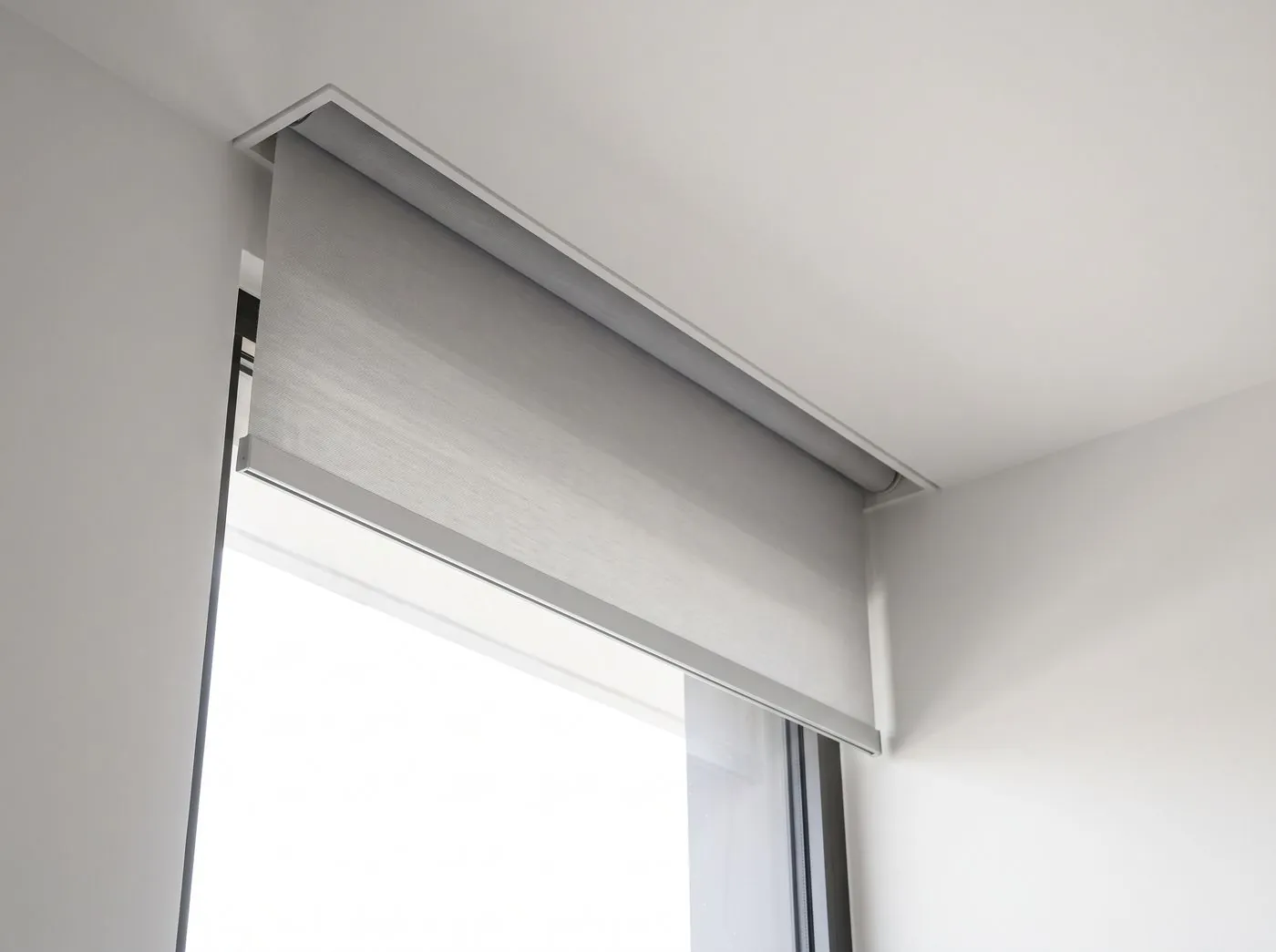
A pocket is a slot framed into the ceiling above the window. The roll sits inside it, and only the fabric and the hem bar show. Lutron lists these top treatments for its Sivoia roller shades.
| Top treatment | Published sizes | What it holds |
|---|---|---|
| Recessed single pocket | 3.5, 4, 5 or 7 in | One roll. Larger shades need the larger pockets |
| Recessed dual pocket | 5.5 by 7.5 in, or 7 by 11 in | Two rolls, for example sheer plus blackout |
| Metal fascia, no pocket | 2.75, 3.5 or 4 in | One roll on the surface, behind a metal cover |
The roll gets thicker as the shade gets taller and the fabric heavier, so the pocket follows the shade, not the other way round. A Dual shade needs the dual pocket. Two more reference numbers: The Shade Store asks for 3 to 3-3/4 inches of depth for a flush inside mount with a motor, and Lutron's Palladiom exposed bracket takes no more than 3.25 inches of vertical space.
Do not frame from a web page, this one included. Pocket location, width and depth belong on the drawings for the exact shade system. The systems page shows pocket, fascia and open roll side by side.
Wiring types for hardwired shades
Shade makers use different power schemes, and the wire is different for each.
- Low voltage from a central supply. Lutron's Serena wired shades run on 12V. One Lutron power panel feeds up to ten shades and has to be installed by a licensed electrician. Hunter Douglas requires low-voltage wiring for PowerView+.
- Power over Ethernet. PowerShades runs a shade on a single Ethernet cable with no extra hardware.
- Several options in one product. Screen Innovations lists rechargeable, 24V low-voltage, Ethernet and AC power for its Nano Roll shade.
The practical rule: choose the shade system before the electrician pulls wire. Each run ends at the head of an opening, on the side where the motor will sit.
Backing and blocking in the framing
The full weight of a motorized shade hangs from its brackets. They need solid wood behind them, in the pocket or behind the drywall, not drywall alone. Light and Shade Solutions lists "Required blocking and framing" among the items the drawings must show. Wide groups and doors carry the heaviest shades and need it most.
A checklist by stage of construction
| Stage | What to settle | Who |
|---|---|---|
| Design and plans | Which openings get shades. Single or dual. Pocket, fascia or open roll. Hardwired or wire-free | Owner, architect, shade designer |
| Framing | Pockets framed to the shade maker's dimensions. Blocking at each opening | Builder, framer |
| Electrical rough-in | Wire to each window head. A place for the power supply. Keypad locations | Electrician |
| Before ceilings close | Check pockets and wire ends against the drawings. Photograph each one | Builder |
| Finished openings | Site measure. Shades made to measure | Shade company |
| Installation | Shades hung, limits set, keypads and schedules programmed | Shade company |
The same distributor's advice on the fourth row: "Confirm the pocket with the framer and general contractor before the ceiling is closed."
What to tell the builder and electrician
- Builder: the list of shaded openings, the pocket size for each, and blocking at every bracket location.
- Electrician: the wire type the shade system needs, where each run starts and ends, where the power supply goes, and where the keypads go.
- Both: the upper windows of a two-story room. A window above about 10 feet should be hardwired, because battery service there needs a ladder or lift.
Mode Shades works from plans. Send them through Get a price and a priced design comes back, followed by a site measure.
If you decide after the drywall
The house can still have motorized shades. The options are narrower.
- Wire-free shades. No wire is needed. Published battery life runs from 6 to 12 months for rechargeable motors to 3 to 5 years for Lutron D-cell shades.
- Fascia or open roll in place of a pocket. The roll mounts on the surface. Lutron's metal fascia starts at 2.75 inches.
- Plug-in power. Lutron's Serena line sells a $40 adapter per shade where an outlet is close.
- Opening the walls. One integrator, Wipliance, notes that hardwired shades in an existing home "require opening walls to run wire." A pocket added later means cutting the ceiling and reframing.
The hardwired vs battery guide compares the two power types in detail.
Questions owners ask
Why plan for motorized shades at the start of your home build?
Because pockets, wire and blocking go in before drywall. Wipliance recommends planning during new construction "so that running wire can be pre-planned and more efficient."
How deep does my window need to be to fully recess the shades?
It depends on the shade. The Shade Store asks for 3 to 3-3/4 inches for a flush inside mount with a motor. Lutron's recessed single pockets run from 3.5 to 7 inches.
How much of the window will be blocked when the shade is open?
With a pocket, none: the roll is in the ceiling. With a surface headrail, some. Lutron's Serena FAQ gives 4.5 inches of fascia or headrail over the window for its roller shades.
Can I add motorization on later?
Plan as if the answer is no. Stoneside says motorization has to be chosen when the shade is ordered.
Can you add motorized shades to a house that's already built?
Yes, with wire-free shades or plug-in power and a fascia or open roll. Hardwiring and pockets mean opening walls and ceilings.